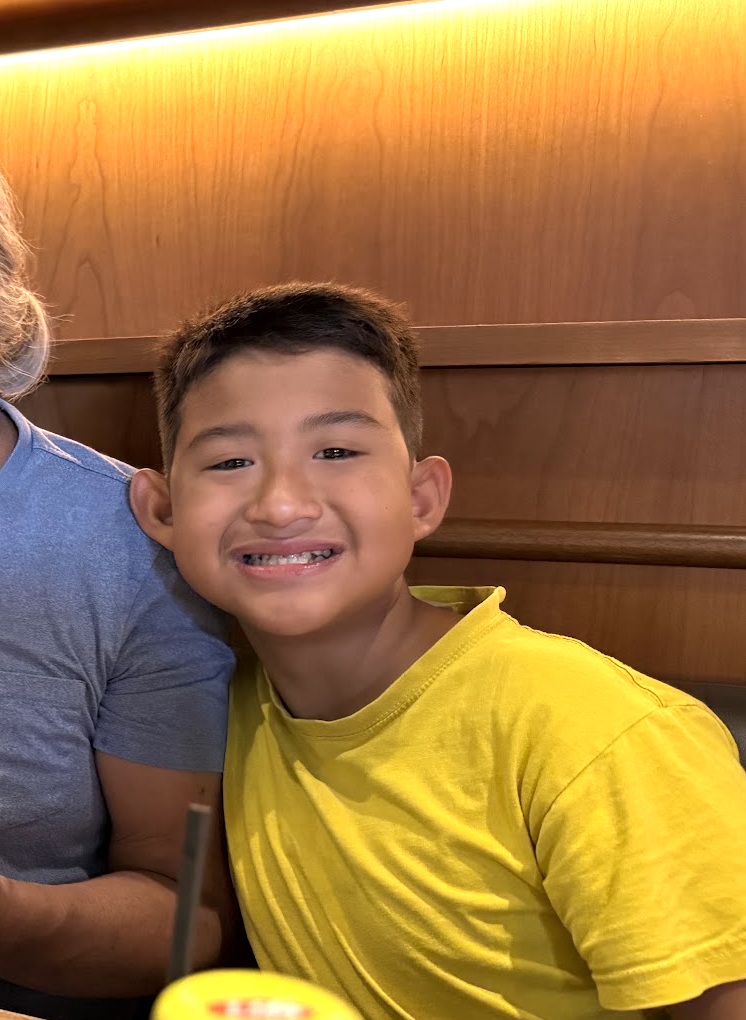
My brain, my way
I was diagnosed with autism when I was young. In Kota Bharu, where I grew up, that word — autism — wasn't something people talked about much. A lot of people didn't really understand it. Some still don't.
In school, I struggled. Words and numbers didn't come easily to me the way they seemed to for everyone else. I needed more time, more patience, a different way of learning. The system wasn't really built for kids like me — and in a smaller city in northern Malaysia, the support just isn't always there. There are no specialist coaches trained to work with neurodivergent athletes. There are no programmes designed for kids who think differently but still want to compete. You either fit the mould or you figure it out yourself.
We figured it out ourselves.
My parents drove me to training when other families didn't have to think twice about it. My coach took the time to understand how I work — that I need routine, that I need calm, that once I lock in I don't stop. Not every kid gets that. I know how lucky I am to have found people who saw me instead of my diagnosis.
The truth is, a lot of autistic kids in Malaysia never get the chance I got. Not because they aren't capable — but because the path to finding your thing, finding your coach, funding your races, is hard enough for any family. When you add a diagnosis that comes with stigma and misunderstanding, a lot of doors just don't open.
I'm not sharing this for sympathy. I'm sharing it because I think it matters for people to know that autistic kids in this part of the world are out there, and they are capable of extraordinary things — they just need someone to believe that first.
Swimming showed me what I'm made of. I hope my story shows someone else what they might be made of too.
About autism in Malaysia — the local context
The number of children with autism registered in Malaysia rose from 6,991 in 2013 to 53,323 in 2023 — a 663% increase in ten years. Ova
Autism prevalence among Malaysian school-age children rose from 6.34 per 1,000 in 2018 to 9.29 per 1,000 in 2022. ResearchGate
Critically for my story — the lowest autism prevalence rates among school-age children were reported in Kelantan and Terengganu — meaning northern Malaysia has fewer registered cases, which likely reflects a lack of diagnosis and awareness, not fewer autistic kids. That's a powerful point. ResearchGate
About autistic kids and sport
Autistic individuals participate in less physical activity than their non-autistic peers, with rates of participation decreasing from childhood to adulthood. PubMed Central
Swimming is one of the sports most consistently recommended for autistic children — it provides structure, individual pacing, and a sensory-friendly environment. LeafWing Center
When sport participation is successful for autistic youth, it supports physical health, social and emotional functioning, and overall quality of life. PubMed Central
In Malaysia specifically, there are no publicly known autistic athletes who have openly disclosed their diagnosis and competed at international level in mainstream sport. The search turned up para-sport athletes with physical and intellectual disabilities, but no named autistic Malaysian athlete in open water or competitive swimming on the world stage.
In Southeast Asia, the closest and most relevant comparison is actually from the Philippines — 13-year-old Palmer Taliño Taray from Davao City, diagnosed with autism, qualified for Oceanman Dubai in 2025 after finishing Oceanman Philippines in Siargao — becoming the first ever finisher with ASD at that event. He's almost exactly Aiden's age and competed in the same Oceanman series. That's a meaningful parallel. vritimes
The bigger picture globally — Indian swimmer Jiya Rai set a world record as the fastest person with autism to swim 14km in open water, and by age 13 had become the youngest female swimmer to cross the Palk Strait, covering 29km in 13 hours. Newz Hook
About barriers
Major barriers for disabled athletes include insufficient coach training, negative attitudes, an ableist mindset, limited access to information, and a lack of accessible facilities. nih
Among Malaysians with learning disabilities, the top barriers to sport are unsuitable facilities, individual health conditions, and limited accessibility — yet swimming was among the most preferred sports. ResearchGate
The inspiring angle — autistic athletes on the world stage
The Paris 2024 Paralympic Games included autistic athletes competing in Para swimming, Para athletics, and Para table tennis. Paralympic
Nicholas Bennett, a Canadian swimmer diagnosed with autism at age 3, was told by doctors he would never walk or talk — he went on to achieve international success in swimming. Opya